Log your meals, then log the times you bloat, with how bad it was and when. Over two to four weeks the diary lines the two up and surfaces the ingredients that keep coming up before each episode: FODMAPs, lactose, wheat, fizzy drinks, certain sweeteners. You get a clear record to take to your GP or dietitian.
Free download Pro £3.99/month or £34.99/year Cancel any time
Four steps, all in one diary: log what you eat, log when you bloat, and the analysis surfaces the foods that keep recurring before your symptoms. No spreadsheets, no paper food diary, no trying to remember on Thursday what upset you on Monday.
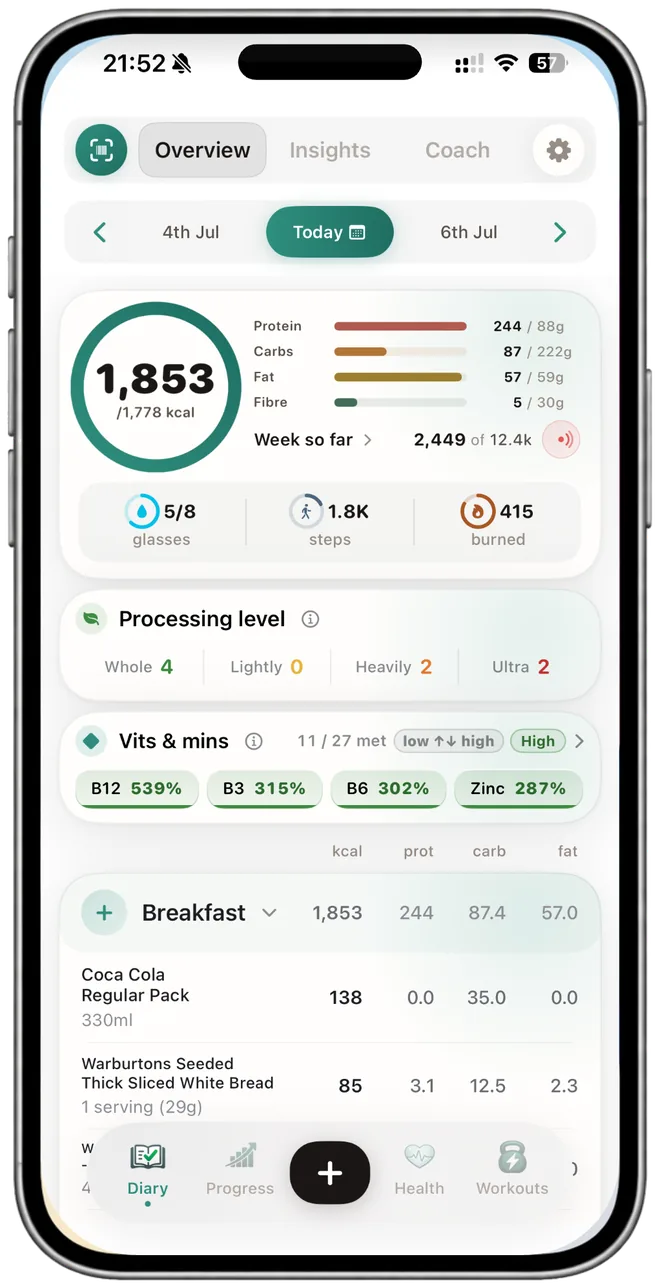
Type a food, scan its barcode, or photograph the plate. NutraSafe finds it in the UK database, branded and own-brand, and logs it with the time. Every meal, snack and drink lands in the same diary, so the record of what you ate is already built by the time the bloating starts.
Logging is free for up to 25 foods a day, no card needed. Tesco, Sainsbury's, Asda, Morrisons, Aldi and Lidl own-brands all read from the same UK barcode, so most of a normal shop is already covered. You do not have to remember Tuesday's lunch on Thursday. It is in the diary, timestamped, ready for the analysis to line up against your symptoms.
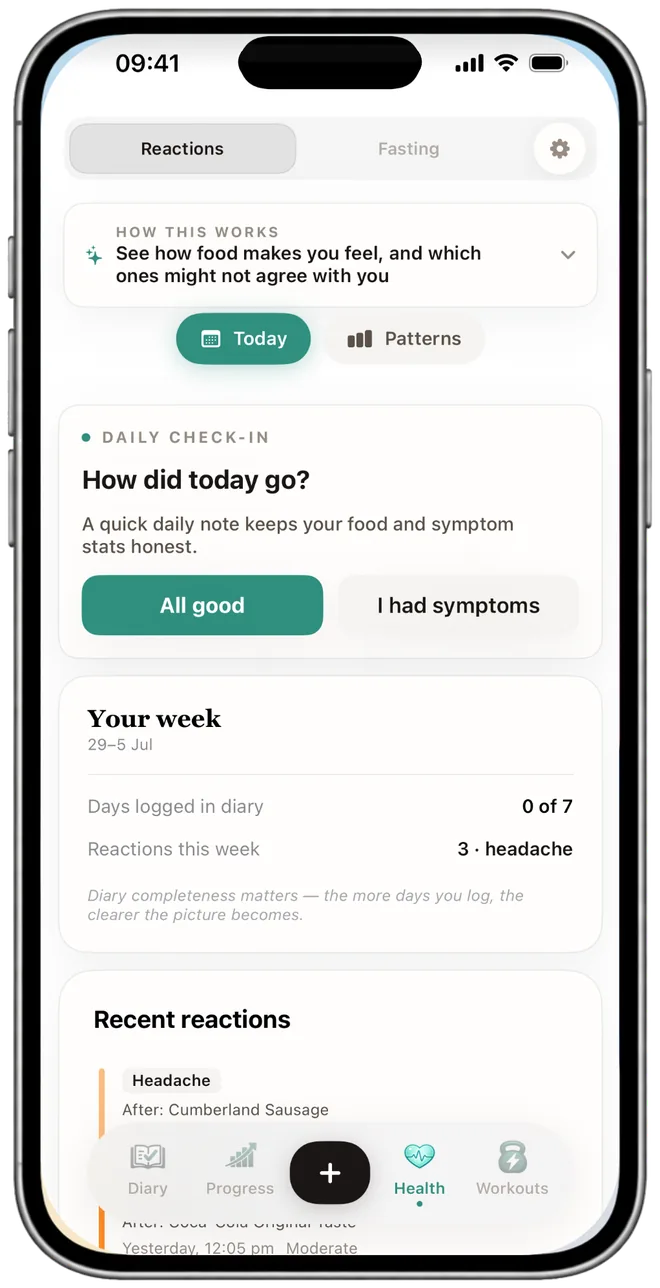
When bloating hits, log it in a couple of taps: how bad it was, and when. NutraSafe attaches it to the exact meals already in your diary, so each episode carries the food that came before it. Bloating, wind, gut discomfort, energy, mood, sleep and skin all log the same way.
The free tier covers up to 5 reactions so you can try the workflow before you commit. Pro opens unlimited reactions and the full history, which is what a fortnight of consistent logging needs to have enough days to work with.
Over two to four weeks the Pro analysis looks back across the hours and days before each bloating episode and counts how often each ingredient turns up. A food that keeps appearing before the bloat, and rarely on your calm days, rises to the top of the list. It weighs how bad each episode was too, so an ingredient that precedes your worst days counts for more than one before a mild flare.
The common culprits it tends to surface are the fermentable carbs (FODMAPs), lactose, wheat, fizzy drinks and the polyol sweeteners. Because a food you eat every single day scores no higher on bloat days than calm days, it will not get blamed just for being common. The list is a shortlist of suspects, not a verdict.
High-FODMAP foods ferment slowly in the large intestine, so the bloating can lag the meal by half a day or more. That delay is exactly what makes triggers hard to pin down from memory: you connect this morning's discomfort with breakfast, not with last night's pasta salad.
The diary does not forget. Because every meal is timestamped and every episode carries its severity and time, the analysis can line up a slow, next-day reaction with the meal that actually preceded it, not just the last thing you ate. Polyol sweeteners like sorbitol and xylitol get flagged on the barcode scan too, so a "no added sugar" squash is easy to spot.
A worked example. Log every meal, log the bloating, and watch which ingredient keeps turning up before the episodes.
Say you log every meal and note a bloating episode most evenings. By the end of a fortnight the diary holds fourteen days of meals and, say, nine bloating episodes, each with a time and a severity behind it. Nothing to remember, nothing to reconstruct.
The analysis reports that sugar-free gum and a diet fizzy drink, both carrying polyol sweeteners, showed up before seven of the nine episodes and on almost none of your calmer days. That is not a diagnosis. It is a shortlist you can take to your GP or a registered dietitian, who can decide whether a supervised trial without them is worth doing.
From there it is a supervised process, not a solo elimination. A dietitian might run a short low-FODMAP trial and reintroduce foods one at a time, using the same diary to check whether the bloating tracks each one back in. The record carries through the whole thing, so nothing rests on memory.
NutraSafe does not tell you to cut anything out, and it does not say "it's the gluten" or "it's the lactose". It lines up what you ate against when you bloated and surfaces the ingredients that keep recurring. What that means is a conversation for a clinician.
The NHS and the British Dietetic Association both recommend keeping a food and symptom diary before any elimination, as a first step to take to your GP or a registered dietitian. That is the part we make easy, by turning a fortnight of meals and episodes into one clear, dated record. The interpretation stays with them.
The questions that come in from the supermarket aisle and the GP waiting room. Answers sourced to the NHS, the British Dietetic Association and Monash FODMAP guidance.
Common bloating triggers include FODMAPs (onions, garlic, wheat, certain fruits), dairy (lactose intolerance), beans and lentils, cruciferous vegetables (broccoli, cabbage), polyol sweeteners (sorbitol, xylitol) and fizzy drinks. Triggers vary a lot between people: what bloats one person may not bother another.
Usually 30 minutes to 2 hours. Some foods, especially high-FODMAP foods that ferment in the large intestine, can delay bloating up to 24 hours. That delay is why a diary matters: you might not connect yesterday's meal with today's bloating.
Log every meal (scan barcodes or search foods), then log bloating when it happens with severity and timing. The suspected-triggers analysis (Pro) looks across the windows before each bloating episode and surfaces ingredients that keep recurring. Patterns usually surface after 2 to 4 weeks of consistent logging.
See a GP if bloating is persistent (most days for 3+ weeks), with unexplained weight loss, blood in stool, persistent pain or significant changes in bowel habits. These can indicate conditions that need medical attention. For occasional food-related bloating, a food diary is a useful first step to bring to the appointment.
No. We don't prescribe and we don't run elimination protocols. The diary surfaces the ingredients that keep recurring before bloating episodes. Elimination and reintroduction belong with a registered dietitian or your GP.
The download is free, and the free tier lets you log up to 25 foods a day and up to 5 reactions so you can try the workflow. NutraSafe Pro at £3.99/month or £34.99/year adds unlimited reactions, full reaction history and the suspected-triggers analysis, which is the part that surfaces the recurring foods.
Yes. The low-FODMAP diet is a registered-dietitian-led elimination and reintroduction protocol, not something to run on your own. NutraSafe is the diary you keep during it: log each meal and each bloating episode so you and your dietitian can see whether symptoms track a food as it is reintroduced.
Free download. Log up to 25 foods and 5 reactions on the free tier. Pro is £3.99/month or £34.99/year for the suspected-triggers analysis, full reaction history and AI Coach.
iPhone · iOS 17 · Cancel any time