Track What You Eat and How You Feel

TL;DR: What you eat directly affects your energy, mood, and wellbeing — through blood sugar, the gut-brain axis, inflammation, and nutrient availability. Tracking meals alongside how you feel reveals personal patterns within 2-3 weeks. NutraSafe connects your food diary and symptom data to help you spot these patterns automatically.

You have probably noticed it yourself — some meals leave you energised and focused, while others are followed by a slump, brain fog, or that heavy, sluggish feeling. This is not in your head. The connection between what you eat and how you feel is well-documented in nutritional science, and it is far more individual than most generic advice suggests. The only way to understand your own food-feeling connection is to track both, together, over time.

The Science Behind Food and How You Feel

The relationship between diet and wellbeing is complex, but several well-researched mechanisms explain why food has such a direct impact on how you feel throughout the day.

Blood sugar and energy

When you eat carbohydrates, your blood sugar rises. How quickly and how high it rises depends on the type of carbohydrate, whether it is accompanied by protein, fat, and fibre, and your individual metabolism. Rapid spikes followed by sharp drops — common after high-sugar, low-fibre meals — are associated with energy crashes, irritability, and difficulty concentrating.

Research published in the American Journal of Clinical Nutrition has shown that meals with a lower glycaemic index produce more stable energy levels and better cognitive performance throughout the day. This is why a sugary cereal might leave you hungry and tired by 10am, while porridge with nuts keeps you going until lunch.

The gut-brain axis

Your gut and brain communicate constantly through what scientists call the gut-brain axis — a bidirectional signalling network involving the vagus nerve, hormones, and immune system molecules. Around 95% of your body’s serotonin (a neurotransmitter that regulates mood) is produced in the gut, not the brain.

The composition of your gut microbiome — the trillions of bacteria in your digestive tract — is directly influenced by what you eat. Diets rich in diverse plant fibres tend to support a more varied microbiome, which research from King’s College London has associated with better mood and reduced anxiety. Conversely, diets high in ultra-processed foods may reduce microbiome diversity.

Inflammation and brain fog

Certain foods can trigger low-grade inflammation in the body. While this is not the acute inflammation of an injury, chronic low-level inflammation has been linked to fatigue, brain fog, and low mood in multiple studies. Foods high in refined sugars, trans fats, and certain additives are more commonly associated with inflammatory responses, while omega-3 fatty acids, colourful vegetables, and whole grains tend to have anti-inflammatory effects.

Nutrient deficiencies and mood

The NHS notes that several nutrient deficiencies are common in the UK and directly affect how you feel:

Why Generic Advice Is Not Enough

You have probably read plenty of articles listing “foods that boost your mood” or “brain foods.” While the underlying science is often sound, these generalised recommendations miss a crucial point: the way food affects you is highly individual.

Your response to specific foods depends on your genetics, gut microbiome composition, metabolic health, food sensitivities, sleep patterns, stress levels, and many other factors. A food that gives one person sustained energy might cause bloating and fatigue in another.

This is exactly why tracking your own food and feelings is so much more valuable than following generic lists. After 2-3 weeks of consistent tracking, you build a personal map of how your body responds to different foods, meals, and eating patterns. That personal evidence is far more useful than any one-size-fits-all advice.

Research supports personal tracking

The ZOE PREDICT study, led by researchers at King’s College London and published in Nature Medicine, found enormous variation in how individuals respond to identical meals. Even identical twins showed significantly different blood sugar, fat, and insulin responses to the same foods. This confirms that personal tracking reveals insights that population-level advice simply cannot.

What to Track: A Practical Approach

Effective food-feeling tracking does not need to be complicated or time-consuming. Here is what to log and when:

With each meal, record:

At 2-3 points during the day, note:

Weekly, notice:

Common Patterns People Discover

After 2-3 weeks of tracking meals and feelings, most people discover at least one surprising pattern. Here are some of the most common:

How NutraSafe Connects the Dots

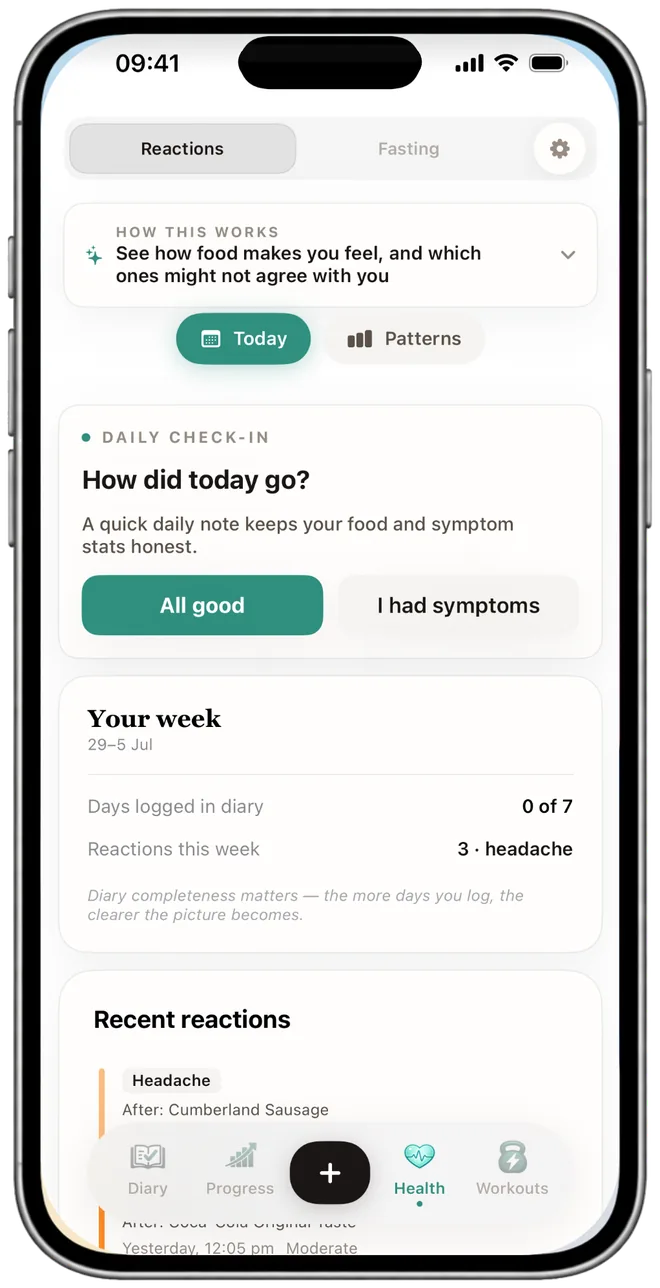
The challenge with food-feeling tracking has always been practicality. Paper diaries are tedious, and using separate apps for food logging and symptom tracking means the data never connects. NutraSafe solves this by putting everything in one place.

Integrated food and feeling logging

When you log a meal in NutraSafe, you can immediately record how you feel. Energy, mood, digestive comfort, and other symptoms are linked directly to what you ate and when — creating a connected timeline rather than two separate lists.

Additive awareness adds depth

Because NutraSafe identifies additives and E-numbers in your food, it can help you spot patterns that a calorie-only tracker would miss. That persistent brain fog might correlate with products containing certain emulsifiers or sweeteners — something you would only discover if your tracker knows what is in your food beyond just macros.

AI pattern recognition

NutraSafe’s AI coach analyses your combined food and feeling data weekly. It looks for correlations between what you eat and how you report feeling, identifying patterns that might take weeks to spot manually. The AI does not diagnose anything — it highlights associations for you to explore.

Nutritional context

If the AI notices that your low-energy days coincide with low iron or vitamin D intake, it can flag this connection. This is where having calorie, nutrient, additive, and symptom data all in one app creates insights that no single-purpose tracker can match.

Getting Started: Your First Two Weeks

Here is a practical plan for beginning to track food and feelings together:

Consistency beats perfection

You do not need to log every single thing you eat or track every feeling to get useful insights. Logging most meals and noting how you feel a few times a day is enough. Missing a meal or a day is fine — the patterns still emerge from consistent-enough tracking over time.

The Research on Food and Mental Wellbeing

The connection between diet and mental health is an active area of research, with several landmark studies supporting the idea that what you eat meaningfully affects how you feel:

It is important to note that most of this research shows associations rather than definitive causation, and diet is one factor among many that influence mental health. However, the consistency of findings across different study types and populations suggests that diet plays a meaningful role in wellbeing for most people.

Start Connecting Food and Feeling

NutraSafe makes it easy to track what you eat and how you feel in one place — so you can discover the patterns that matter to you.

Download NutraSafe Free

Frequently Asked Questions

How does food affect how you feel?

Food affects how you feel through several mechanisms: blood sugar regulation (rapid spikes and crashes affect energy and mood), the gut-brain axis (gut bacteria communicate with the brain via the vagus nerve, influencing mood and cognition), inflammation (certain foods can trigger low-grade inflammation linked to brain fog and fatigue), and nutrient availability (deficiencies in iron, B12, vitamin D, and omega-3s are associated with low mood and tiredness). These effects are highly individual, which is why tracking your own patterns is so valuable.

What should I track alongside my meals?

For the most useful insights, track four things alongside what you eat: energy levels (on a simple scale of low, moderate, or high), mood (calm, anxious, irritable, content), digestive comfort (any bloating, discomfort, or changes), and mental clarity (focused, foggy, or somewhere in between). Logging these at 2-3 points during the day takes less than a minute and reveals patterns within 2-3 weeks.

How long does it take to spot food-mood patterns?

Most people start noticing patterns within 2-3 weeks of consistent tracking. Some connections become obvious quickly — like the energy crash that always follows a sugary lunch. Others, particularly delayed reactions or cumulative effects, may take 3-4 weeks to become clear. The key is consistency rather than perfection — logging most meals and feelings is more useful than tracking everything perfectly for a few days then stopping.

Can food really affect your mental health?

Research increasingly suggests a connection between diet and mental wellbeing. Studies published in the BMJ and other journals have found associations between dietary patterns and mental health outcomes. The SMILES trial (2017) showed that dietary improvement significantly reduced depression symptoms. However, food is one factor among many — sleep, exercise, stress, and genetics all play roles. Tracking helps you understand how food specifically affects your individual wellbeing.

Is there an app that tracks food and how you feel?

Yes. NutraSafe allows you to log meals and track how you feel — energy, mood, digestive comfort, and other symptoms — in the same app. Because your food diary and symptom data are connected, NutraSafe can help identify correlations between specific foods or eating patterns and how you feel. The AI coach also analyses these patterns in your weekly assessment.

Related Resources

Explore more about understanding the connection between food and wellbeing:

Last updated: February 2026