
You probably don't need most supplements. Here's the handful you might.
The NHS line is quietly reassuring: most people should get most of what they need from a varied, balanced diet. A handful of everyday foods do a lot of the heavy lifting. There are a few real shortfalls the national survey keeps flagging, and a few honest exceptions where the NHS does name a supplement. Here is where the line sits.
What the body actually needs
Before any of the food talk, it helps to know the size of the list. The body uses a long list of vitamins and minerals, fat-soluble and water-soluble, and no single food carries them all. That, in one line, is the whole argument for variety rather than a daily tablet.
The minerals are the easier set to picture: calcium, iron, iodine and magnesium, plus potassium, zinc, selenium, copper, manganese, molybdenum, phosphorus, chromium and sodium chloride, which is salt. The vitamins split into two camps, and the split matters more than it sounds.
The fat-soluble vitamins, A, D, E and K, can be stored in the liver and fatty tissue, so the body keeps a reserve and you do not strictly need each one every single day. The water-soluble vitamins, the eight B vitamins and vitamin C, are not stored the same way, so the diet has to keep topping them up. The British Nutrition Foundation puts it plainly: fat-soluble vitamins can be stored, water-soluble ones must be provided regularly.
Because the fat-soluble vitamins are stored, they are the ones you can overdo. The NHS warns that too much vitamin A over years can weaken bones, and too much vitamin D can raise blood calcium to harmful levels. This is rarely a risk from food, and almost always a risk from high-dose supplements.
Most of it comes from the plate
The NHS is plain about this: most people should get all the vitamins and minerals they need by having a varied, balanced diet. The same sentence sits on its main vitamins page and on the page literally titled "Do I need vitamin supplements?". It is not a throwaway reassurance; it is the default position, with the exceptions named separately.
That does not mean every plate is covered. The National Diet and Nutrition Survey, the rolling government survey of what the country actually eats, flags real shortfalls. The point is not to panic about a single low day, but to notice a week that is repeatedly short of the same nutrient, and to look at the foods below before reaching for a pill.
The quiet heavy-hitters
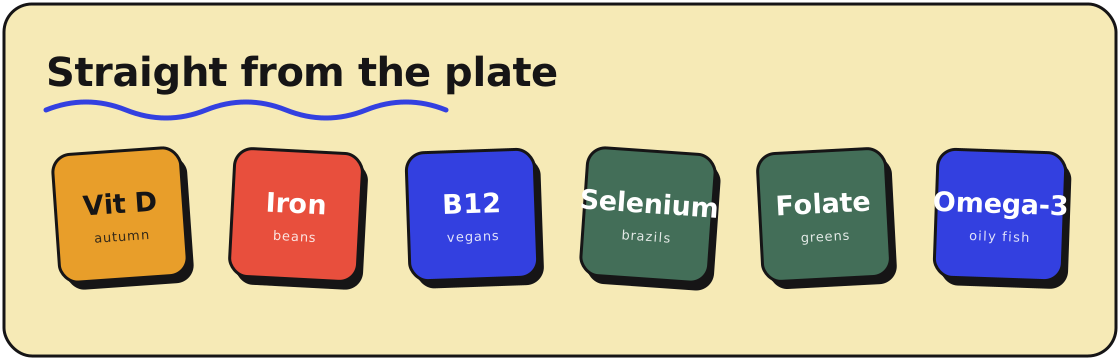
Some everyday foods deliver far more than their reputation suggests. None of these are exotic, and none need a supplement aisle.
Where UK diets actually fall short
The NHS food-first message is true and also incomplete on its own, because the national survey shows specific gaps. The National Diet and Nutrition Survey (NDNS) measures intakes against the Lower Reference Nutrient Intake, the level set so low that anyone below it is very likely short. In the survey covering 2016 to 2019, a few nutrients stood out.
The pattern lands hardest on teenage girls and women. For girls aged 11 to 18 in that survey, nearly half were below the lower reference level for iron and for magnesium, and a large share for selenium and potassium. Among women aged 19 to 64, roughly a quarter fell below for magnesium and potassium, and selenium ran low across nearly half. Vitamin D is measured differently, by blood status, and around one in six adults had low status in the survey.
In NDNS years 9 to 11, covering 2016 to 2019, around 49% of girls aged 11 to 18 had iron intakes below the lower reference level. That is the clearest single-group shortfall in the survey, which is why iron in younger women keeps coming up.
The food fixes track the gaps closely, and most are unglamorous. Iron sits in red meat, beans and pulses, fortified cereals and dark greens, and plant iron goes further alongside a vitamin C source. Magnesium and potassium come from wholegrains, nuts, beans, potatoes and greens. Selenium is the Brazil-nut and fish story above. Iodine leans on dairy and white fish, which is why people who have dropped both, often vegans, are the group the BDA flags. None of this needs a supplement aisle first; it needs a slightly different shopping list. The reference levels themselves are set by the Scientific Advisory Committee on Nutrition (SACN), which inherited the job of defining what "enough" means for the UK.
Why food usually beats a pill
For most vitamins the molecule is identical whether it comes from an orange or a capsule. What changes is the dose, the company it keeps, and how easy it is to overshoot. A carrot brings beta-carotene wrapped in fibre, potassium and water at a modest dose, which is a very different thing from an isolated high dose of the same named nutrient.
The company it keeps is not just garnish. Some nutrients work better together, and food tends to deliver the helpers in the same mouthful. The clearest example is iron: the BDA notes that the non-haem iron in plants is absorbed better when eaten with a vitamin C source, and absorbed worse alongside the tannins in tea and coffee. Haem iron, from meat and fish, is the better-absorbed form to begin with. A pill of one nutrient gives you the nutrient; a plate gives you the nutrient plus the conditions that help you use it.
It is also difficult to take too much of most nutrients by eating real food. The NHS food-first position, repeated across its pages, is that most people should get what they need from a varied and balanced diet, with supplements named only for specific people. The honest caveat is that the word matrix and the synergy framing are ours, not the regulator's; what the NHS actually says is simpler, that a varied diet does the job for most people.
When supplements backfire
More is not safer, and a few well-documented cases show why. None of this is an argument against the supplements the NHS does name; it is the reason the NHS attaches upper limits to so many of them.
The starkest case is beta-carotene, the orange pigment the body can turn into vitamin A. Two large trials set out to see whether high doses would cut lung cancer in people at high risk, and found the opposite. The ATBC trial gave 20mg a day to Finnish male smokers and recorded about 18% more lung cancer than placebo. The CARET trial gave 30mg of beta-carotene plus retinol to smokers and asbestos-exposed workers, recorded about 28% more lung cancer, and was stopped early for harm. The same nutrient eaten in carrots and sweet potato did not show that effect; the US National Institutes of Health notes the harm signal was specific to high-dose supplements in smokers.
Too much vitamin A in the retinol form can harm a baby's development, so the NHS advises against vitamin A supplements and cod liver oil in pregnancy, and against liver and liver products, which are very rich in retinol. For everyone else, the NHS caps long-term retinol at 1.5mg a day from food and supplements combined.
Minerals can overshoot too. The NHS notes that 17mg or less a day of iron supplements is unlikely to cause harm, while higher doses bring constipation, nausea and stomach pain, and that very high doses can be fatal to children, which is why supplements are kept out of reach. It sets similar markers elsewhere: 350µg or less a day of selenium, 540mg or less of vitamin E, 400mg or less of magnesium from supplements, and under 1,000mg a day of vitamin C are each described as unlikely to cause harm. For zinc and vitamin B6 it goes further, advising not taking more than 25mg of zinc or 10mg of B6 a day in supplements unless a doctor says so. These are not scare figures; they are the NHS drawing the line between a sensible top-up and a high dose.
Where the NHS does name a supplement
The food-first message has a few clear exceptions. These are not our advice; they are what the NHS sets out, and they apply to specific people or specific times of year.
How much you actually need
If you have ever squinted at a label reading 100% NRV and wondered whether that meant you were sorted for the day, the answer is: not exactly. The number on the pack and the amount you personally need are two different figures doing two different jobs.
UK and EU labels use the Nutrient Reference Value, or NRV. It is a single, all-population figure used so that one label works for everyone, which is why it is not tuned to your age, sex or situation. The clearest mismatch is vitamin C: the labelling NRV is 80mg, while the NHS dietary recommendation for adults aged 19 to 64 is 40mg a day. Both are correct; they are just answering different questions. Vitamin D is another, where the older labelling NRV of 5µg sits below the 10µg the NHS now recommends as an actual intake.
The US system uses a different reference, the Daily Value, set against its own recommendations, so a percentage on a US import will not line up with a UK one. None of this changes the food-first picture. It is worth knowing mainly so that a label percentage reads as a rough guide, not a personal target, and so a high number does not get mistaken for a reason to double up.
Track the pattern, take it to your GP
You do not need a blood test to notice that your week is repeatedly short of iron or magnesium. You need a record. Logging across a week smooths out the day-to-day swings and shows whether a nutrient is genuinely low or just uneven, which is the view worth acting on. That is what how to track them walks through.
The food fixes are usually small and specific once you can see the gap: a couple of Brazil nuts for selenium, more beans and greens for iron, a vitamin C source alongside a plant-iron meal. But the decision about whether anything more changes belongs with a clinician. We track and show patterns; we do not diagnose, and we do not tell anyone to start or stop a supplement. If your record shows a steady shortfall, or you fall into one of the exceptions above, take the numbers to your GP and let them advise.
How NutraSafe helps
You cannot eyeball a week of iron or magnesium. You need a record, and building that record is the part the app does for you.
Log what you eat across a normal week, by scanning the barcode on packaged food or typing in the whole foods, and NutraSafe builds the picture you cannot hold in your head: how your vitamins and minerals are tracking against the reference values, day by day and across the week. One meal tells you almost nothing; the week is the thing worth acting on.
The weekly summary is where the gaps surface. If your selenium or your iron sits below the line most days, it shows you, so the conversation with your GP starts from a record rather than a hunch. Food logging and barcode scanning are free; the vitamin and mineral tracking and the weekly summary are part of Pro.
See your week, find the gaps
Log a week and let NutraSafe show you where your vitamins and minerals actually land.
Get NutraSafe on the App StoreSources
- NHS, Vitamins and minerals, including the vitamin D, folic acid, B12, vitamin A, iron and selenium pages, and "Do I need vitamin supplements?".
- NHS, Vitamins, supplements and nutrition in pregnancy, and Foods to avoid in pregnancy.
- NHS Healthy Start scheme (free vitamins for eligible families).
- Scientific Advisory Committee on Nutrition (SACN), UK dietary reference values, and statements on vitamin D, selenium and iodine.
- National Diet and Nutrition Survey (NDNS), results from years 9 to 11 combined (2016 to 2019).
- British Dietetic Association (BDA), food fact sheets on iron, iodine and selenium.
- British Nutrition Foundation, fat-soluble versus water-soluble vitamins.
- The ATBC (NEJM, 1994) and CARET (NEJM, 1996) trials on high-dose beta-carotene supplements in smokers.
- US National Institutes of Health, Office of Dietary Supplements, on beta-carotene from food versus supplements.
A 2026 change: folic acid in flour
From 13 December 2026, non-wholemeal common wheat flour milled or imported for the UK must include folic acid, alongside revised minimum levels for iron and niacin. That population measure does not replace the existing pregnancy advice to take 400 micrograms of folic acid before conception and through the first 12 weeks.
For most other nutrients, the NHS position remains food first: most people should obtain what they need from a varied, balanced diet, with specific supplements advised for particular groups. Government flour-fortification rules · NHS vitamins and minerals
Last reviewed: 17 September 2026