
The UK macro tracker that reads carbs, protein and fat off the label
Log a meal by barcode, by name, or by photo, and NutraSafe counts the carbs, protein and fat and rolls them up against your targets. It also reads what's in the food: the additives on the label, and your vitamins and minerals against the UK guideline amounts. Macros, additives, vitamins and workouts all sit in the same diary.
Free up to 25 logs a day Pro £3.99/month or £34.99/year UK barcodes, UK NRVs
Carbs, protein and fat per meal, and per day
The three macros are what you came for. NutraSafe pulls them straight off the UK label, rolls them up against your targets, and keeps the fibre, saturated fat, sugar and salt behind them in the same diary.
Carbs, protein and fat, straight off the label
Scan a UK barcode, search by name, or photograph the plate, and NutraSafe reads the carbs, protein and fat off the nutrition panel, branded and own-brand. Pick the portion and the grams scale to what you actually ate, then land in one running diary.
The macro bars fill as the day goes on, so you can see the split at lunch rather than working it out after dinner. Logging is free for up to 25 foods a day; Pro lifts the cap and adds the AI photo scan for home-cooked and restaurant meals with no barcode.
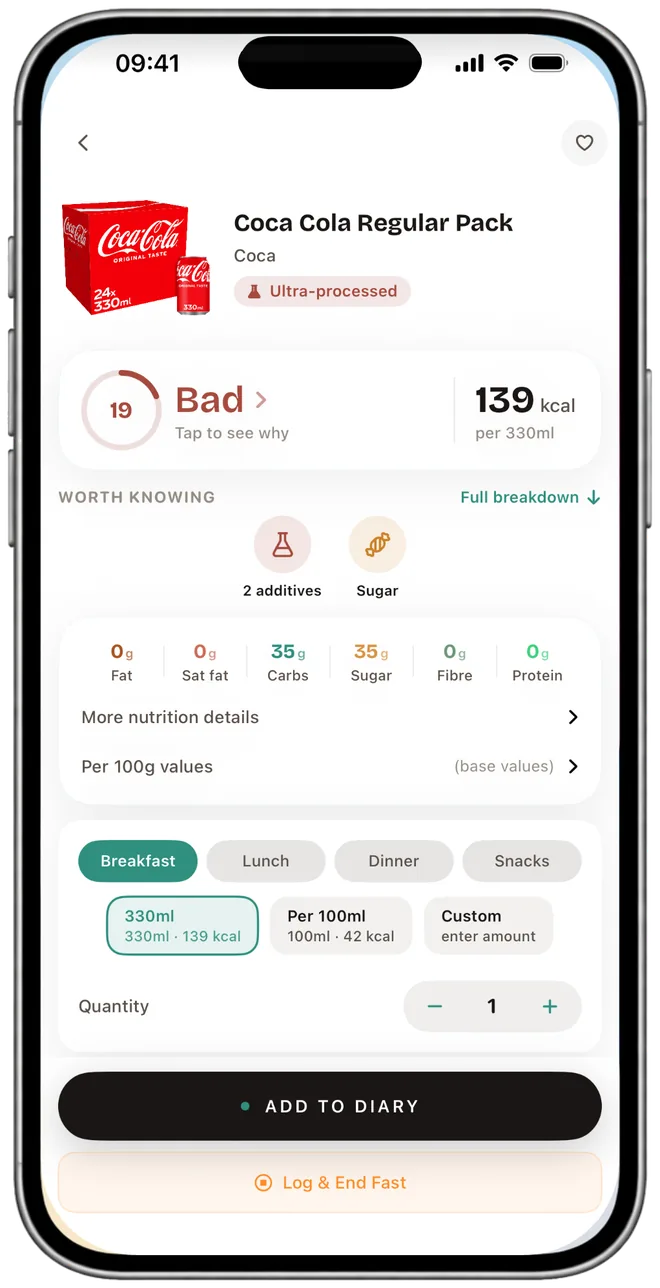
Tap a food to see the full breakdown
A plain macro app stops at three numbers. Tap any food in NutraSafe and the whole label opens: the macros, yes, but also the ingredients list, every additive that carries a watch-out, and how processed the food is.
So a high-protein snack that is also stacked with additives does not slip past you. You get the grams and what sits behind them, with the published source for anything flagged, so what you make of it is your call, not a verdict we hand down.
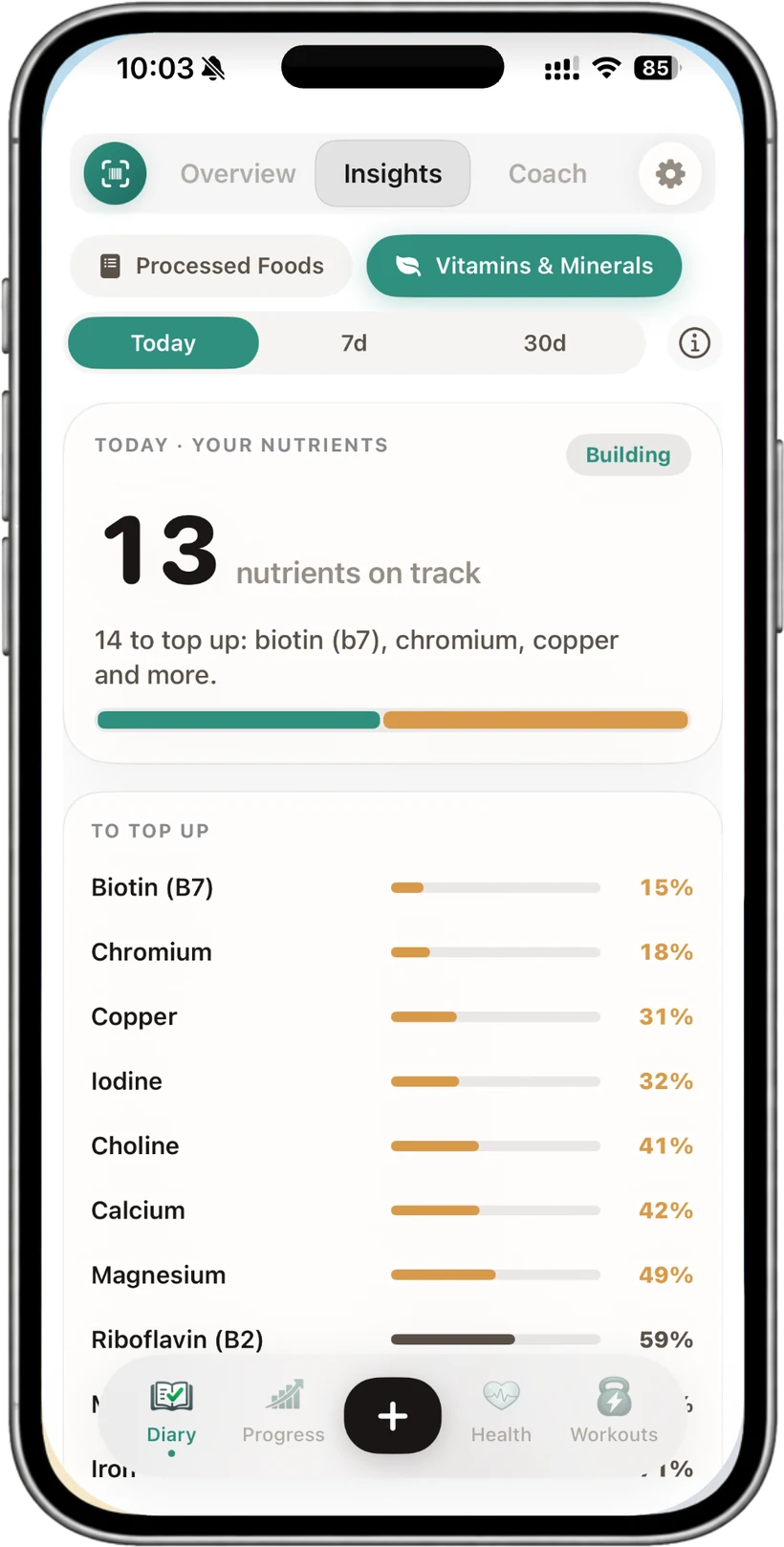
Vitamins and minerals next to your macros
A day where you hit your protein, carbs and fat can still leave you short on vitamin D or folate. As you log, we fill your day in against 13 vitamins and 12 minerals, on the foods we hold the data for, measured to the UK Nutrient Reference Values rather than a generic chart.
So instead of three numbers you see where you actually stand: what you keep hitting and what you keep falling short on, day by day and week by week. The UK's national diet survey keeps finding gaps people only catch from a blood test; this shows the pattern first. (Pro.)
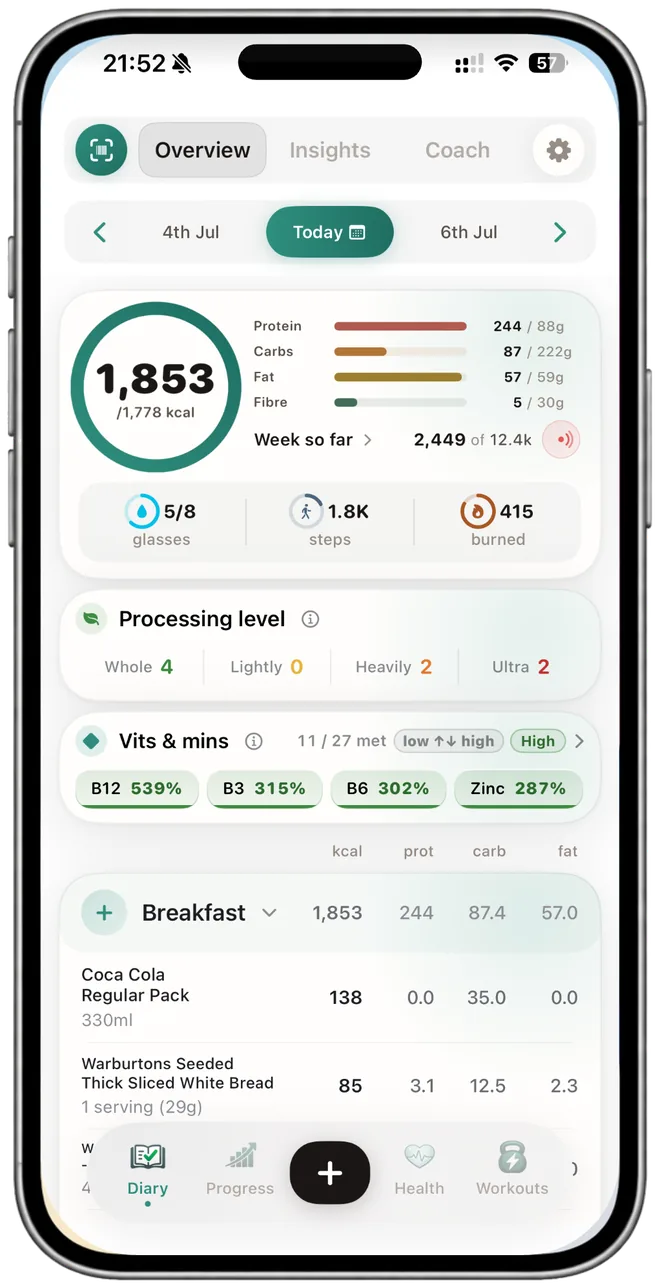
Your daily split against your target
Set your protein, carb and fat targets once, whether you are cutting, bulking or holding steady. The diary rolls the day's running totals against them and shows the gap while there is still a meal left to close it.
Chasing a protein number for the gym? Set it high and log your sets in the same diary as your food. Cutting? Watch the carbs and fat come down against the calories. It is one log in one place, updated as you eat, not two apps you copy numbers between. (Workouts on Pro.)
A macro tracking day, worked through
A typical lifter's day: porridge and Greek yoghurt, a shop sandwich, a whey shake and a salmon dinner. Here is the split we would show in the diary.
What the day adds up to, by macro and by source
The diary keeps a running protein figure at the top, with carbs and fat below it. Tap a number to see which food each gram came from. A rough day might look like this:
- Breakfast: porridge and Greek yoghurt. 32g carbs, 18g protein, 9g fat.
- Lunch: chicken and bacon sandwich. 35g carbs, 23g protein, 22g fat.
- Snack: whey and banana. 27g carbs, 25g protein, 2g fat.
- Dinner: salmon, sweet potato and broccoli. 48g carbs, 32g protein, 16g fat.
Each meal rolls against whatever targets you set. For a UK baseline, the NHS caps fat at 35% of energy and saturated fat at 11%, SACN's 2015 guideline puts free sugars under 5%, about 30g a day, and protein sits around 0.75g per kg of body weight for an average adult, higher if you train. Set your split once and the day counts up against it.
Calories vs macros: what's the difference?
People treat them like rival diets. They are the same food looked at two ways: calories are the total, macros are what that total is made of. If you are still choosing what to track in, six trackers are compared in our best calorie counter app uk roundup.
Same calories can do completely different jobs
Take 500 calories two ways. A plate of chicken, rice and veg keeps you full for hours and holds onto muscle. Five biscuits hit the same 500 and you are hungry again by eleven. Same number, opposite result, and the only thing that changed is the macro split.
That is why we keep both in one diary. The calorie total runs along the top, the macro breakdown sits underneath, and every gram comes straight off the UK label. See the UK calorie counter if the total is what you care about most.
Macro tracker FAQ
Answers sourced to SACN, NHS Eatwell and the UK food labelling rules. If yours isn't here, our contact page goes to a real inbox.
A macro tracker logs the three energy-providing nutrients in your food (carbohydrates, protein and fat) and adds them up across the day. We pull the figures straight from the UK nutrition panel on whatever you scan or search, so the numbers match the labels you actually buy.
Three ways. Scan a UK barcode (any GTIN or EAN, the same format every UK supermarket uses). Search our food database by name. Or photograph a plate with our AI meal scan on NutraSafe Pro. Pick a portion, hit add, and the day's carbs, protein and fat update in real time.
The app is free to download. The free tier logs up to 25 foods a day with full carb, protein and fat tracking, scans UK barcodes for additive detail, and lets you log reactions while you build a baseline. NutraSafe Pro is £3.99 a month or £34.99 a year on iOS and unlocks vitamins and minerals against UK NRVs, AI Coach, AI meal scan, allergen warning detail, fasting, workouts, suspected-triggers analysis, and processed-food and NRV insights.
The NHS Eatwell baseline is fat under 35% of energy, saturated fat under 11%, free sugars under 5%, and around 0.75g of protein per kg of body weight a day for the average adult (higher if you train). The remainder is carbs. Your own target depends on weight, training and goals. Set it once, then log against it.
Macros tell you about energy. Vitamins and minerals tell you what is actually missing. The UK National Diet and Nutrition Survey 2019 to 2023 (gov.uk, June 2025) found 18% of UK adults had low vitamin D status, and 83% of women of childbearing age were below the folate threshold. You can hit your macro split every day and still be short on those nutrients. Vitamin and mineral tracking against UK NRVs is a NutraSafe Pro feature.
Yes. We read any UK GTIN or EAN, the same barcode format used across every UK supermarket, so anything with a barcode you can buy here looks up the same way. We don't have per-retailer integrations; the database is one global barcode lookup.
Read
next.
More on this, sourced the same way.
How much protein to build muscle
UK guidance says 0.75g per kg, the research plateaus at 1.62g per kg. Why both are right, and what happens above it.
Why calorie counting stops working
People in the landmark study reported 1,028 calories and ate 2,081. The four leaks to check before changing your target.
Scan a UK pack, get carbs, protein and fat off the label, and log it in one diary
Free up to 25 food logs a day. NutraSafe Pro is £3.99/month or £34.99/year on iOS for unlimited logs, vitamins and minerals against the UK NRV, AI meal scan, AI Coach, workouts, fasting and suspected triggers. See what's free and what's Pro.
iPhone · iOS 17 · Cancel any time